

The countertop space in my kitchen is a high-stakes real estate market, and for years, the “mini-chopper” category was dominated by a single name. I decided to pit the Cuisinart Mini Prep (2.63 Cup) against its younger, more muscular sibling, the Cuisinart Mini Prep Plus (3 Cup). What I discovered is that while they look like twins separated at birth, their internal DNA – specifically the wattage and the torque – creates a massive divide in how they handle everything from soft parsley to rock-hard peppercorns.
If you’ve ever tried to mince a single clove of garlic in a full-sized 14-cup processor, you know the frustration of watching that clove spin around the bowl like a lonely marble. These mini units are designed to solve that specific problem. However, after a week of making pestos, grinding spices, and dicing shallots, I’ve realized that “Plus” isn’t just a marketing suffix; it’s a performance tier. Here is the reality of living with these two pint-sized powerhouses.
The Key Difference: Cuisinart Mini Prep vs. Mini Prep Plus Food Processor
The fundamental gap between these two models is the wattage-to-volume ratio.
The Cuisinart Mini Prep (2.63 Cup) operates with a modest 110-watt motor. It is a light-duty specialist, perfect for emulsifying a quick vinaigrette or chopping soft herbs. It’s built for the “occasional” cook who needs a helping hand with minor prep.
The Cuisinart Mini Prep Plus, however, jumps significantly to a 250-watt motor. That is more than double the power in a footprint that is nearly identical. This extra headroom allows the “Plus” model to tackle harder ingredients – like aged Parmesan or toasted walnuts – without the motor smelling like a burnt slot car. Furthermore, the 3-cup bowl of the Plus provides that extra bit of “breathing room” that prevents ingredients from getting jammed under the blade.
Technical Comparison Table: Cuisinart Mini Prep vs. Mini Prep Plus Food Processor
| Feature | Cuisinart Mini Prep | Cuisinart Mini Prep Plus (DLC-2ABC) |
| Motor Wattage | 110 Watts | 250 Watts |
| Bowl Capacity | 2.63 Cups | 3 Cups (24 oz) |
| Blade System | Patented Reversible Stainless Steel | Patented Reversible SmartPower |
| Control Type | Push-Button (Chop/Grind) | Push-Button (Chop/Grind) |
| Finish | Stainless Steel/Silver | Brushed Chrome |
| Weight | Lightweight Plastic Body | Durable Lightweight Plastic |
| Warranty | Limited 18-Month | Limited 18-Month |
| Best For | Soft herbs, garlic, oils | Hard cheese, nuts, dicing veg |
| Buy On Amazon | Check on Amazon | Check on Amazon |
My Hands-On Experience: A Detailed Comparative Review
Design: Aesthetics vs. Footprint
Unboxing the Mini Prep, I was impressed by how much it felt like a toy – and I mean that in the best way. It’s incredibly light and has a classic “silver” finish that looks clean and modern. It takes up less space than a toaster, making it easy to keep on the counter 24/7. The 2.63-cup bowl feels sturdy enough, and the handle is ergonomic for such a small unit.
The Mini Prep Plus in “Brushed Chrome” feels a bit more “adult.” The lines are slightly sharper, and the build quality feels a bit more dense, likely due to the heavier 250-watt motor inside. The 3-cup bowl is a noticeable upgrade; while it doesn’t sound like much, that extra capacity means you can fit an entire bunch of cilantro in there without having to stuff it down. One thing I noticed is that the Plus model feels more “planted” on the counter. When you hit the “Grind” button, it doesn’t vibrate as much as the 110-watt model.
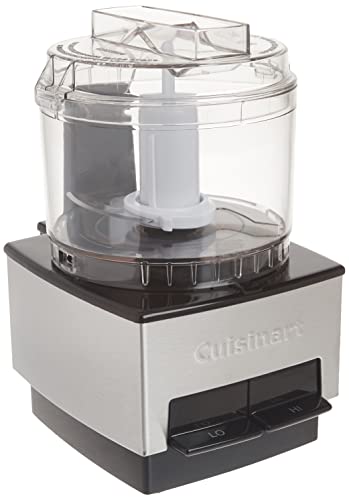
Cuisinart Mini PREP Food Processor Custom, 2.63 Cup, Silver
- SUPERIOR FUNCTION: The Cuisinart 110-watt mini prep plus processor quickly chops and grinds with a patented reversible stainless-steel blade for chopping/grinding
- CONTROL: Push-button control panel with durable yet lightweight plastic body - Auto-reversing SmartPower blade for chopping and grinding two powerful processing options
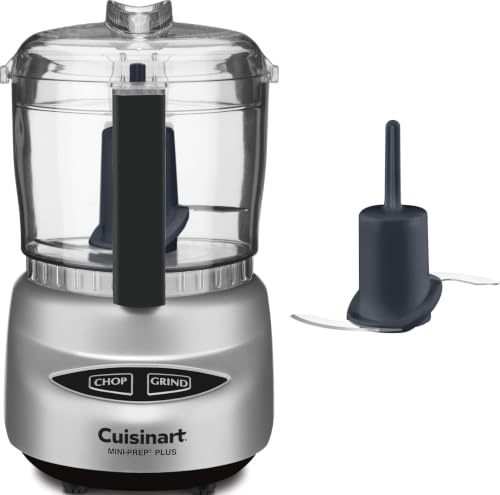
Cuisinart Mini Food Processor, Reversible Blade, 3-Cup Capacity | Mini electric food chopper chops herbs, vegetables & cheese, dishwasher-safe work…
- SUPERIOR FUNCTION: The Cuisinart Mini-Prep Plus Food Processor offers an efficient 250-watt motor and patented reversible stainless steel blade to quickly chop herbs, dice vegetables, and grind hard cheese
- CONVENIENT CONTROL: The 24-ounce food chopper with durable, lightweight plastic body features a push-button control panel and auto-reversing SmartPower blade for two powerful processing options—chop and grind (not recommended to grind beans as it chops)
Ease of Use: The “Auto-Reverse” Magic
Both machines utilize Cuisinart’s patented reversible blade system. This is a genius bit of engineering: one side of the blade is sharp for chopping (onions, herbs, crumbs), and the other side is blunt for grinding (spices, hard cheeses).
On the Mini Prep, the buttons are responsive and easy to pulse. I found that for simple tasks, like making a quick garlic paste, it was effortless. However, the lid can be a bit finicky to lock into place until you find the “sweet spot.”
The Mini Prep Plus felt smoother in its operation. The buttons have a slightly better tactile “click” to them. But the real ease-of-use win for the Plus is the SmartPower blade speed. Because the motor is stronger, the “Pulse” action is more immediate. I could get a coarse chop on a celery stalk without it turning into mush, which is a common problem with lower-wattage motors that take a second to spin up to speed.
Functions: The “Soft” vs. “Hard” Ingredient Test
I put both through a “Pesto Challenge.”
- The Mini Prep (110W): It handled the basil and pine nuts beautifully. However, when I added the chunks of Pecorino Romano, the motor pitch changed. It struggled to “catch” the hard cheese and eventually got it done, but I could tell it was working at its absolute limit.
- The Mini Prep Plus (250W): It obliterated the hard cheese in seconds. The 250 watts of power meant the blades didn’t slow down when hitting resistance. I also used the Plus to grind peppercorns and even a few coffee beans (though not recommended for long-term use). It functioned more like a high-end spice grinder than a food chopper.
The “Grind” vs “Chop” functionality works identically on both, but the Plus is the only one I would trust with ingredients that have any real “crunch.” If you’re just dicing shallots for a vinaigrette, the standard Mini Prep is fine. If you’re making a dry rub or shredding hard parmesan, the Plus is mandatory.
Maintenance: Dishwasher Safety and Staining
Cuisinart was smart enough to make both units entirely dishwasher-safe (the bowl and blade, at least). I ran both through several cycles.
The Mini Prep bowl is a bit thinner, and I noticed it felt a little more “flexible” after a high-heat wash. It didn’t warp, but it gave me a moment of pause.
The Mini Prep Plus bowl felt more rigid. Both models are BPA-free, which is a standard I expect in 2026. One small tip from my time with them: if you chop a lot of carrots, the orange beta-carotene can stain the plastic. I found that wiping the bowls with a tiny bit of vegetable oil before washing them keeps them crystal clear. The motor bases are easy to wipe down, but the “Brushed Chrome” on the Plus hides greasy fingerprints much better than the “Silver” finish of the standard model.
Cuisinart Mini Prep (2.63 Cup) Food Processor
Cuisinart Mini PREP Food Processor Custom, 2.63 Cup, Silver
- SUPERIOR FUNCTION: The Cuisinart 110-watt mini prep plus processor quickly chops and grinds with a patented reversible stainless-steel blade for chopping/grinding
- CONTROL: Push-button control panel with durable yet lightweight plastic body - Auto-reversing SmartPower blade for chopping and grinding two powerful processing options
Pros:
- Ultra-Lightweight: Perfect for those who store their appliances in high cabinets.
- Affordable: Great entry-point for a student or someone with minimal prep needs.
- Small Footprint: Fits in the tightest kitchen corners.
- Effective for Soft Foods: Excellent for baby food, herbs, and garlic.
Cons:
- Underpowered: 110 watts is not enough for hard nuts or aged cheeses.
- Capacity:63 cups fills up faster than you’d think – one large onion and it’s full.
- Lid Tension: The locking mechanism feels a bit more “plastic-y” and delicate.
Cuisinart Mini Prep Plus (3 Cup) Food Processor
Cuisinart Mini Food Processor, Reversible Blade, 3-Cup Capacity | Mini electric food chopper chops herbs, vegetables & cheese, dishwasher-safe work…
- SUPERIOR FUNCTION: The Cuisinart Mini-Prep Plus Food Processor offers an efficient 250-watt motor and patented reversible stainless steel blade to quickly chop herbs, dice vegetables, and grind hard cheese
- CONVENIENT CONTROL: The 24-ounce food chopper with durable, lightweight plastic body features a push-button control panel and auto-reversing SmartPower blade for two powerful processing options—chop and grind (not recommended to grind beans as it chops)
Pros:
- Double the Power: The 250-watt motor is a workhorse that doesn’t quit.
- Versatile: Truly handles “Grind” tasks like spices and hard cheeses without stalling.
- Better Volume: The 3-cup capacity allows for slightly larger batches of pesto or salsa.
- Build Quality: Feels more “pro-sumer” and stable during high-speed use.
- Value: For a small price jump, you get a significantly more capable machine.
Cons:
- Slightly Louder: The 250W motor has a more aggressive sound profile.
- Price: Usually sits at a higher price point than the base model.
The Verdict: Which Mini Is the Master?
After living with both, the decision is surprisingly lopsided if you value your time and your ingredients.
I recommend the Cuisinart Mini Prep (2.63 Cup) for:
The “Herb and Garlic” specialist. If you already have a full-sized food processor and you literally just want a tiny machine to mince garlic, ginger, and parsley so you don’t have to pull out the big unit, this works. It’s a specialized tool for very light tasks.
I recommend the Cuisinart Mini Prep Plus (3 Cup) for:
Literally everyone else. The jump from 110 to 250 watts is the most significant upgrade you can make in a small appliance. It turns the machine from a “chopper” into a “processor.” The Plus can handle the heavy lifting – nuts, hard cheeses, and thick pastes – that would eventually burn out the motor on the standard model. Plus, the extra capacity means you’re doing fewer batches.
My Personal Recommendation: Buy the Mini Prep Plus. In my kitchen, the 250-watt motor made the standard Mini Prep feel obsolete within the first ten minutes. It’s the difference between a tool that “might” work and a tool that “will” work, no matter what you throw in the bowl.
Frequently Asked Questions
Can I grind coffee beans in these?
The manual specifically mentions not to grind coffee beans in the Plus model, and the same applies to the standard Mini Prep. While the 250W motor can do it, the oils from the beans can cloud the plastic bowl over time, and the consistency won’t be as uniform as a dedicated burr grinder.
Is the 3-cup bowl interchangeable with the 2.63-cup base?
No. While they look similar, the locking tabs and the center post heights are different. You cannot swap parts between the Mini Prep and the Mini Prep Plus.
How do I stop it from puréeing my onions?
The secret is the Pulse. Don’t just hold the button down. On both models, tap the button for half a second, let the ingredients settle, and tap again. Usually, 3-5 pulses is all you need for a perfect dice.
Can I make nut butter in the Mini Prep Plus?
Technically, yes, but you have to be careful. Because the bowl is small, the friction creates heat quickly. I recommend doing it in short 30-second bursts and letting the motor cool down in between so you don’t melt the plastic hub or strain the 250W motor.
Is the blade really that sharp?
The “Chop” side of the blade is extremely sharp. Always handle it by the central plastic hub. I’ve seen many seasoned cooks get a nick because they underestimated how sharp Cuisinart makes their stainless steel blades.


