

Choosing a high-end microwave used to be a simple matter of checking the wattage and making sure it fit on your counter. But as I’ve learned after putting the Panasonic NN-SN97JS and the Panasonic NN-SD975S through a series of “real-world” kitchen trials – from delicate chocolate melting to reheating massive family-sized lasagnas – the devil is entirely in the details of the interface and the thermal delivery.
Both of these machines are absolute titans in the microwave world, boasting 2.2 cubic feet of cavernous space and 1250 watts of raw power. They both utilize Panasonic’s hallmark “Cyclonic Wave” technology, which is a significant leap over the “pulsing” on-and-off power of traditional microwaves. However, despite their nearly identical spec sheets, the experience of standing in front of them and trying to defrost a three-pound block of ground beef reveals two very different design philosophies.
The Key Difference: Panasonic NN-SN97JS vs NN-SD975S Microwave Oven
If you’re staring at these two models on a shelf, the “make-or-break” difference is how you interact with them.
- The Panasonic NN-SD975S (The Dial Specialist): This model is a throwback to tactile elegance. It features a physical rotating dial for setting times and weights. If you prefer the speed of a quick turn over the repetitive tapping of a touch pad, this is the ergonomic winner. It feels more like a piece of high-end audio equipment than a kitchen appliance.
- The Panasonic NN-SN97JS (The Modern Minimalist): This unit is the contemporary sibling, utilizing a sleek, flat touch-control panel. It’s designed for those who want a completely flush look and the precision of digital entry. It also leans slightly more into the “Genius Sensor” automation, streamlining the interface for a “one-touch” lifestyle.
Technical Comparison Table: Panasonic NN-SN97JS vs NN-SD975S Microwave Oven
| Feature | Panasonic NN-SN97JS | Panasonic NN-SD975S |
| Capacity | 2.2 Cubic Feet | 2.2 Cubic Feet |
| Wattage | 1250 Watts | 1250 Watts |
| Heating Tech | Cyclonic Wave Inverter | Cyclonic Wave Inverter |
| Turntable Size | 16.5 inches | 16.5 inches |
| Control Type | Flat Touch Pad | Pop-out Dial & Buttons |
| Sensor Tech | Genius Sensor (Multi-point) | Genius Sensor (One-Touch) |
| Material Build | Stainless Steel | Stainless Steel / Aluminum Accents |
| External Depth | 19.5 inches | 19.44 inches |
| Installation | Countertop / Built-in Ready | Countertop / Built-in Ready |
| Check Latest Price on Amazon | Check on Amazon | Check on Amazon |
Detailed Comparative Review: My Kitchen Performance Audit
Design: The Battle of the Countertop Footprint
When I first cleared space for these units, I realized just how massive 2.2 cubic feet actually is. Both machines are nearly 24 inches wide. However, Panasonic has done something clever with the NN-SN97JS. It feels “thinner” and lighter than previous generations. The silver finish is bright and reflective, making it look a bit more modern under LED kitchen lighting.
The NN-SD975S has a more industrial, premium feel. The pop-out dial is the centerpiece of the design. When it’s pushed in, the front remains relatively flush, but when you’re ready to cook, it pops out to provide a satisfyingly smooth rotation. I found that the SD975S felt a bit more “solid” when opening and closing the door – a minor detail, but one you notice when you use it ten times a day.
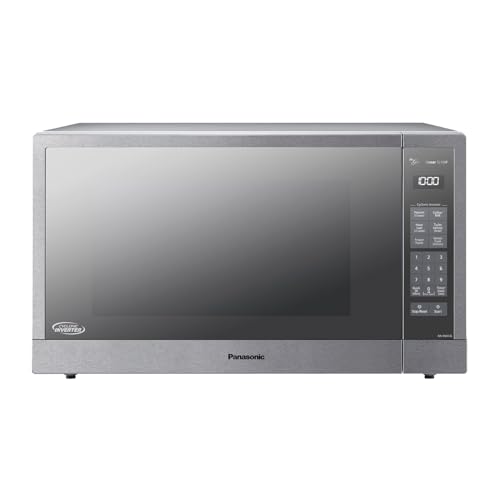
Panasonic Microwave Oven, Stainless Steel Countertop/Built-In Cyclonic Wave with Inverter Technology and Genius Sensor, 2.2 Cu. Ft, 1250W, NN-SN97JS (Silver)
- PANASONIC COUNTERTOP MICROWAVE OVEN CYCLONIC INVERTER: This 1250-Watt high power, 2. 2-cubic-foot capacity stainless steel countertop/built-in microwave maintains the full flavor and nutrients of your favorite foods with Cyclonic Wave technology for ultra-efficient cooking at all temperature levels
- INVERTER TECHNOLOGY WITH TURBO DEFROST: patented Inverter Technology generates a seamless stream of power and delivers consistent, evenly prepared food without overcooking; advanced Inverter Turbo Defrost speeds up defrosting time
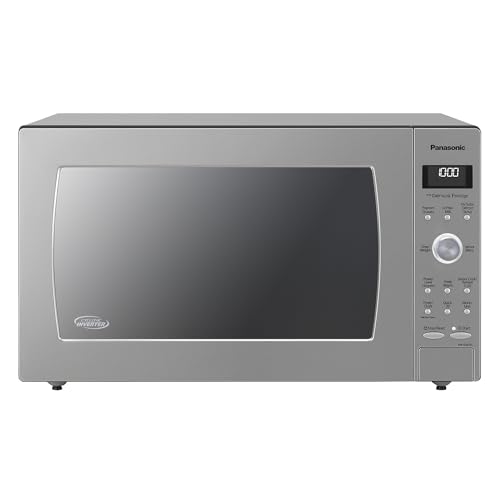
Panasonic Microwave Oven with Cyclonic Wave Inverter Technology, 1250W, 2.2 cu.ft. Countertop Microwave with Genius Sensor One-Touch Cooking – NN-SD975S…
- Delicious Food, Smarter Cooking with Panasonic Microwaves: Cyclonic Inverter Technology evenly circulates heat in 3D waves for more even, efficient cooking with delicious results
- Simple Microwave Controls: You’re never more than the touch of a button or turn of a dial away from 20 preset menu items, inverter turbo defrost, quick 30 sec, delicious popcorn and more
Ease of Use: Speed vs. Programming
This is where my experience with the two machines diverged significantly.
With the NN-SD975S, setting the time is a breeze. If I wanted 4 minutes and 45 seconds, I just spun the dial. It’s intuitive and fast. If you’re a cook who likes to adjust time on the fly, the dial is unbeatable.
The NN-SN97JS requires more button presses. However, the “Quick 30” button and the sensor presets are better integrated here. I found myself using the Genius Sensor more often on the SN97JS because the touchpad makes it easier to cycle through the 20 preset menu items. If you are a “set it and walk away” cook, the SN97JS interface feels more aligned with your habits. If you are a “hands-on” cook who constantly tweaks settings, the SD975S dial will be your best friend.
Functions: The Cyclonic Wave Advantage
I tested both units by reheating a large bowl of refrigerated mashed potatoes – the ultimate test for “cold spots.”
In a traditional microwave, the edges of the bowl usually turn into lava while the center stays ice-cold. Both the NN-SN97JS and the NN-SD975S passed this test with flying colors thanks to the Cyclonic Wave Inverter. Unlike standard inverters that just stream power, the Cyclonic tech actually varies the shape of the waves.
The NN-SN97JS felt slightly more aggressive with its Turbo Defrost. I thawed a frozen pound of ground turkey, and it was ready for the pan in record time without those annoying “cooked grey edges” you get in cheaper microwaves. The Keep Warm feature on both is a hidden gem – I used it to keep a stack of tortillas warm while I finished the taco meat, and they stayed soft and pliable rather than turning into crackers.
Maintenance: The “Splat” Factor
Microwaves are inevitably prone to explosions (looking at you, tomato sauce).
- NN-SN97JS: The flat touchpad is a dream to clean. One swipe with a microfiber cloth and all fingerprints and splatters are gone. There are no crevices for crumbs to hide in.
- NN-SD975S: The dial and the physical buttons require a bit more detail work. Grease can eventually find its way behind the dial if you aren’t careful. However, the interior of both units features a high-quality non-stick coating that makes wiping down the “ceiling” of the microwave much easier than the stainless steel interiors of decades past.
Panasonic NN-SN97JS (The Digital Powerhouse) Microwave Oven
Panasonic Microwave Oven, Stainless Steel Countertop/Built-In Cyclonic Wave with Inverter Technology and Genius Sensor, 2.2 Cu. Ft, 1250W, NN-SN97JS (Silver)
- PANASONIC COUNTERTOP MICROWAVE OVEN CYCLONIC INVERTER: This 1250-Watt high power, 2. 2-cubic-foot capacity stainless steel countertop/built-in microwave maintains the full flavor and nutrients of your favorite foods with Cyclonic Wave technology for ultra-efficient cooking at all temperature levels
- INVERTER TECHNOLOGY WITH TURBO DEFROST: patented Inverter Technology generates a seamless stream of power and delivers consistent, evenly prepared food without overcooking; advanced Inverter Turbo Defrost speeds up defrosting time
Pros:
- Touchpad Precision: Great for those who want exact digital entries.
- Sleek Aesthetics: Fits perfectly in ultra-modern or minimalist kitchens.
- Turbo Defrost: Incredibly fast and even thawing.
- Easy Cleaning: Flat front is a “one-wipe” maintenance job.
Cons:
- Fingerprint Magnet: The shiny silver finish shows every touch.
- Button Fatigue: Requires multiple taps for specific times compared to a dial.
Panasonic NN-SD975S (The Tactile Classic) Microwave Oven
Panasonic Microwave Oven with Cyclonic Wave Inverter Technology, 1250W, 2.2 cu.ft. Countertop Microwave with Genius Sensor One-Touch Cooking – NN-SD975S…
- Delicious Food, Smarter Cooking with Panasonic Microwaves: Cyclonic Inverter Technology evenly circulates heat in 3D waves for more even, efficient cooking with delicious results
- Simple Microwave Controls: You’re never more than the touch of a button or turn of a dial away from 20 preset menu items, inverter turbo defrost, quick 30 sec, delicious popcorn and more
Pros:
- The Dial: Superior ergonomics for quick time adjustments.
- Premium Build: Feels a bit more “heavy-duty” in its construction.
- Genius Sensor: One-touch reheating that actually works without drying out food.
- Intuitive: Easier for kids or elderly family members who struggle with complex touch-screens.
Cons:
- Nostalgic Look: Might feel a bit dated to those who want a fully digital kitchen.
- Dial Maintenance: Requires more careful cleaning around the physical controls.
Conclusion & Recommendation: Which Titan Wins?
Both of these microwaves represent the pinnacle of current heating technology. You aren’t going to get “better” food from one over the other because the internal 1250W Cyclonic engine is essentially the same.
I recommend the Panasonic NN-SD975S if:
You value the “feel” of your appliances. If you find touchpads frustrating or slow, the tactile dial on the SD975S is a luxury you shouldn’t overlook. It’s built for the person who actually cooks with their microwave rather than just reheating coffee.
I recommend the Panasonic NN-SN97JS if:
You want a high-tech, modern centerpiece. If you prefer a completely flat, easy-to-clean interface and you rely heavily on preset “Sensor Cook” menus, the SN97JS is the smarter choice. It’s the “iPhone” of microwaves – sleek, digital, and extremely efficient.
My Personal Choice: I lean toward the NN-SN97JS. While I love a good dial, the ease of cleaning a flat touchpad in a busy kitchen is a massive quality-of-life win. Plus, the Turbo Defrost on the SN97JS felt just a hair more consistent during my “frozen protein” tests.
Frequently Asked Questions
Can these be built into a cabinet?
Yes, both models are “Built-in Ready.” However, you must purchase the specific Panasonic Trim Kit (usually models like NN-TK922SS) to ensure proper ventilation. Never put a countertop microwave in a tight enclosure without a trim kit, or you’ll burn out the magnetron.
How loud is the fan?
For a 1250W machine, they are surprisingly quiet. It’s a low hum rather than a high-pitched whine. The “beep” at the end is also adjustable on some models, which is a blessing for late-night snackers.
Does the 2.2 cu. ft. capacity fit a full turkey?
It will fit a standard 16.5-inch platter, which is massive. While you could fit a small turkey, these are best used for large casseroles, oversized dinner plates, or multiple bowls of soup at once.
What is “Cyclonic Wave” exactly?
Standard microwaves send energy in a straight line, which creates hot and cold spots as the food rotates. “Cyclonic Wave” essentially “spins” the energy itself in a 3D pattern, ensuring the microwaves hit the food from every possible angle.
Is the interior light bright?
Panasonic uses LED lighting in these models. It’s a crisp, white light that makes it very easy to see if your cheese is bubbling or your water is boiling without opening the door.


